Moving to Panama: Why Your Income Has to Come from Outside

Daniel Huber, MBAFounder of Plaith
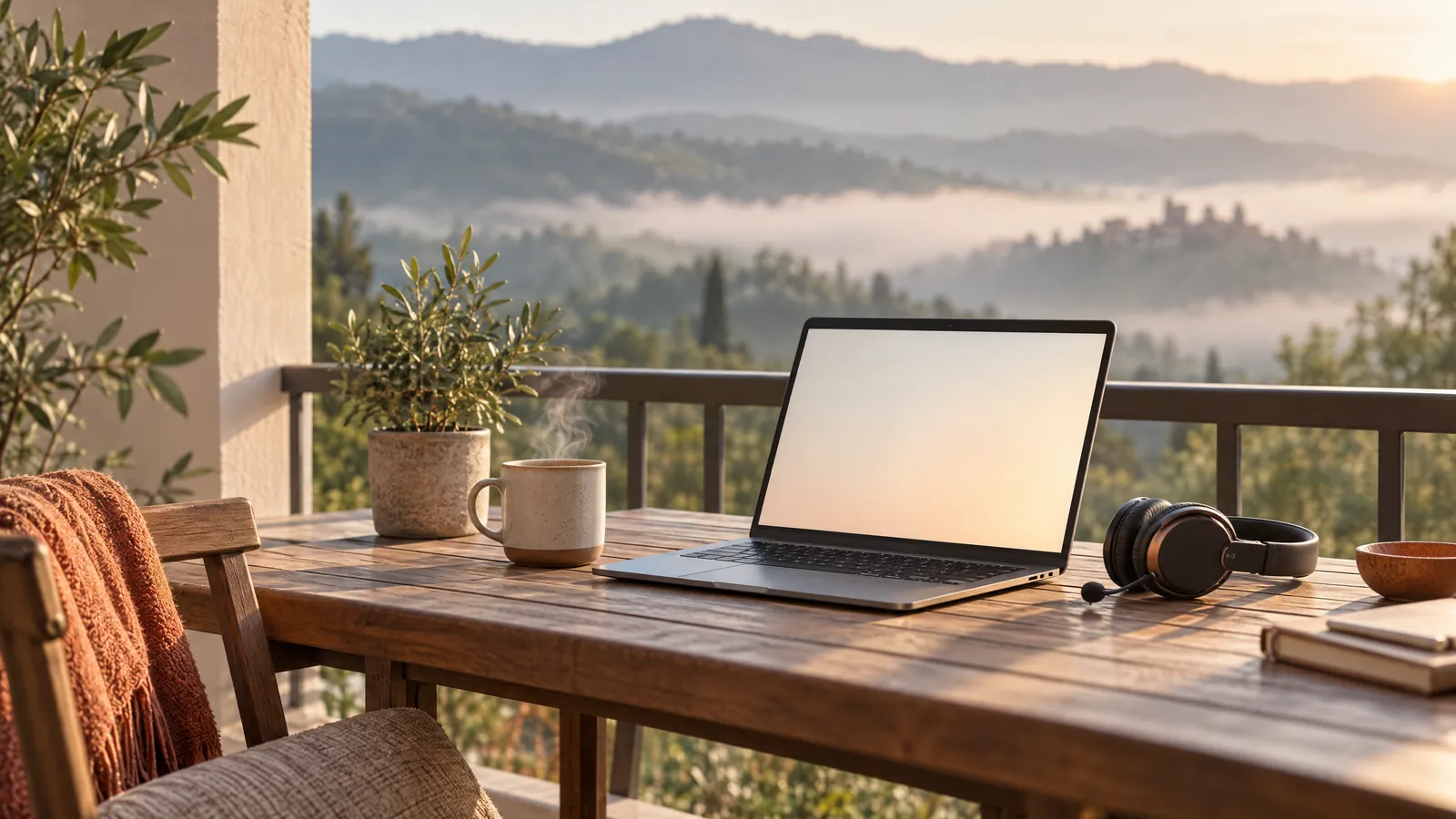
Once again I've been reading about the problems people run into. This time on r/Panama, among people who want exactly what many in the German-speaking countries (Germany, Austria and Switzerland) dream of: getting away, warmth, the US dollar as currency, a country between two oceans. Anyone thinking about moving to Panama quickly ends up with pictures of skylines, mountain mist in Boquete and islands in Bocas del Toro.
But the question that comes up most often there isn't about the most beautiful beach. It's this: what am I going to live on?
I know that question well. I emigrated myself in 2021, to Cyprus, and the moment it gets real isn't the flight. It's the first month in which the money no longer comes from your old employer.
The First Case: "Which Companies Hire Remotely from Panama?"
In March 2026, someone on r/Panama asked which companies employ people in Panama remotely and pay reliably (see the original post).
The answers are honest and at times sobering. One person suggests simply searching on LinkedIn. Another names nearshore firms that place professionals from Latin America with clients in the US, mainly in marketing, design and tech. Several write that there are hardly any Panamanian companies with genuine remote positions and that employee protection there is weaker. And one warns: don't expect US salaries, competition is tough, and anyone right at the start of their career has a particularly hard time at the moment.
Perhaps the smartest advice in the thread: offer a company to start out as a contractor paid by the hour. That way you build the relationship before a permanent position is even on the table.
What I take away from the thread: nobody there describes a path where you move to Panama and simply find a well-paid job locally.
Why the System Is Built Exactly This Way
Panama introduced its own visa for remote workers in 2021, the "Visa de Corta Estancia como Trabajador Remoto". According to the official ProPanamá website and the immigration authority, the main points are roughly these:
- You need foreign income of at least 36,000 balboas a year, which is 3,000 a month. The balboa is pegged to the US dollar. You can qualify as an employee of a foreign company or as a self-employed person with foreign clients.
- The visa is valid for nine months and can be extended once for another nine months.
- You declare in writing that you will not take on any work in Panama, whether for locals, residents or tourists or for companies doing business in Panama.
- Health insurance that is valid in Panama is mandatory, and the application is filed locally through a lawyer.
Sources: ProPanamá and the Migración requirements list. Always check the current conditions yourself before you make plans, because visa rules change.
What this means for you: working remotely in Panama is explicitly provided for. But the money has to come from outside. The local job market is not your plan A.
Moving to Panama: A Realistic Look at Costs
Panama isn't automatically cheap. As a rough guide for Panama City, a single person spends about €1,430 to €2,270 a month, depending on the neighborhood and lifestyle. That's a rough range, not a guarantee, and rents in popular neighborhoods change quickly. In the mountain town of Boquete or on the Pacific coast around Coronado it can be cheaper, while on the islands of Bocas del Toro the internet is often shaky.
On top of that come issues many people underestimate. There is no general double taxation agreement on income between Germany and Panama, only one for shipping and air transport (if you're from Austria or Switzerland, check this separately). And anyone leaving Germany has to deal with the German exit tax if company shares are involved. That's no reason not to do it. It is a reason to talk beforehand to a tax adviser who knows their way around international cases.
The Second Case: Is the Internet Good Enough for My Calls?
A user who works remotely for a US company and has Teams calls every day asked on r/Panama whether he could work reliably there (see the original post).
The answers: in Panama City the internet is usually stable, and there are coworking spaces. In the countryside things can look different, with power cuts and no fiber.
That sounds trivial, but it's crucial for anyone who earns money remotely. If your income depends on calls, you choose where to live based on the connection, not just the view. A dropped call with a prospect costs you more than a month of coworking.
The Time Zone: Your Morning, Europe's Afternoon
Panama is on UTC minus 5 and doesn't change its clocks. During the European winter you're six hours behind Germany, in summer seven. If you start at 8:00 in the morning in Panama, it's 14:00 or 15:00 in Berlin.
That means your morning overlaps with the European afternoon. You put calls with clients or prospects in the German-speaking countries into your first working hours. The rest of the day you work in peace, or you talk to clients in the Americas. That's not a drawback but a rhythm you get used to.
Working Remotely Abroad: Two Paths That Suit Panama
Path 1: You work remotely in sales for a European company. You hold your conversations by video, the company you work for is based outside Panama, and you work as a self-employed contractor. That fits the logic of the visa: foreign clients, no local work.
Path 2: You take your own business with you. You're a coach, consultant or service provider, or you run an online store, and your customers are in the German-speaking countries. Then you need a way to win new customers without being there in person. Referrals from back home often dry up after a few months because you're no longer visible.
In both cases, what the Reddit thread shows applies: your income has to be in place, or at least getting started, before you board the plane.
And one more thing from the first case is worth taking to heart: the advice to start as a contractor. In remote sales, that's exactly the usual route. You start out self-employed, prove yourself in real conversations, and the relationship grows with the results. That's more honest than any job promise.
Before You Book: Five Questions to Ask Yourself
- Where does my money come from in the first month? If the answer is "I'll figure that out once I'm there", wait a little longer.
- Do I meet the income threshold for the visa? And can I back it up with documents?
- Where exactly do I want to live? Check the internet and power supply for that specific place, not for the country.
- When will I hold my calls? Schedule your calls in the morning, before Europe finishes work for the day.
- Who advises me on taxes? Get your departure, residence and health insurance clarified in writing before you hand in your notice.
What You Get Out of It
You want to go to Panama. Maybe you've already saved pictures of Boquete or compared costs. And then comes the question no expat video answers for you: how do I earn my money there without depending on the local market?
You can live a relaxed life in Panama when your income comes from Europe and your calls fit into your morning.
Here's what you gain:
- A realistic picture. You know from real answers that local remote positions are rare. So you don't plan around a job market that is barely open to you.
- Clarity about the rules. You know that the remote work visa requires foreign income and rules out local work. That way you avoid an expensive mistake.
- A daily routine that works. Calls with Europe in the morning, then free time or quiet work. Whether it's remote sales or your own business, the time zone works for you.
How much you earn depends on you and your path. Nobody here is promising you fixed figures.
What This Looks Like at Plaith
Plaith is based in Cyprus. We help self-employed people and small businesses win customers predictably through Meta Ads. At Plaith, 6 specialists, combining people and AI, take care of videos, ad messaging and campaign management, from €26 a day plus a one-time setup. That works just as well if you live in Panama and your customers are in the German-speaking countries.
We're also looking for sales partners who work remotely. If that's your path, find out how to become a partner.
If you want to know whether Plaith is right for your business, book a short call with René. Fifteen minutes, no sales pressure, and we'll tell you honestly if it's not a fit.
Frequently Asked Questions
Can I Find a Job in Panama?
It's possible, but hard. According to the answers on r/Panama, there are few local remote positions and stiff competition. Most people who work remotely there have clients abroad.
Is There a Digital Nomad Visa in Panama?
Yes. The remote worker visa requires foreign income of at least 3,000 US dollars a month, is valid for nine months and can be extended once. Check the current rules with the immigration authority.
What Does It Cost to Live in Panama?
In Panama City, roughly €1,430 to €2,270 per person per month, depending on the neighborhood. Often less in smaller towns.
Does the Time Zone Work for Working with Germany?
Yes, if you start early. Panama is six to seven hours behind Germany. Your morning is the European afternoon.