
Moving to Malta: Working Remotely and Winning Clients from the Island

Daniel Huber, MBAFounder of Plaith
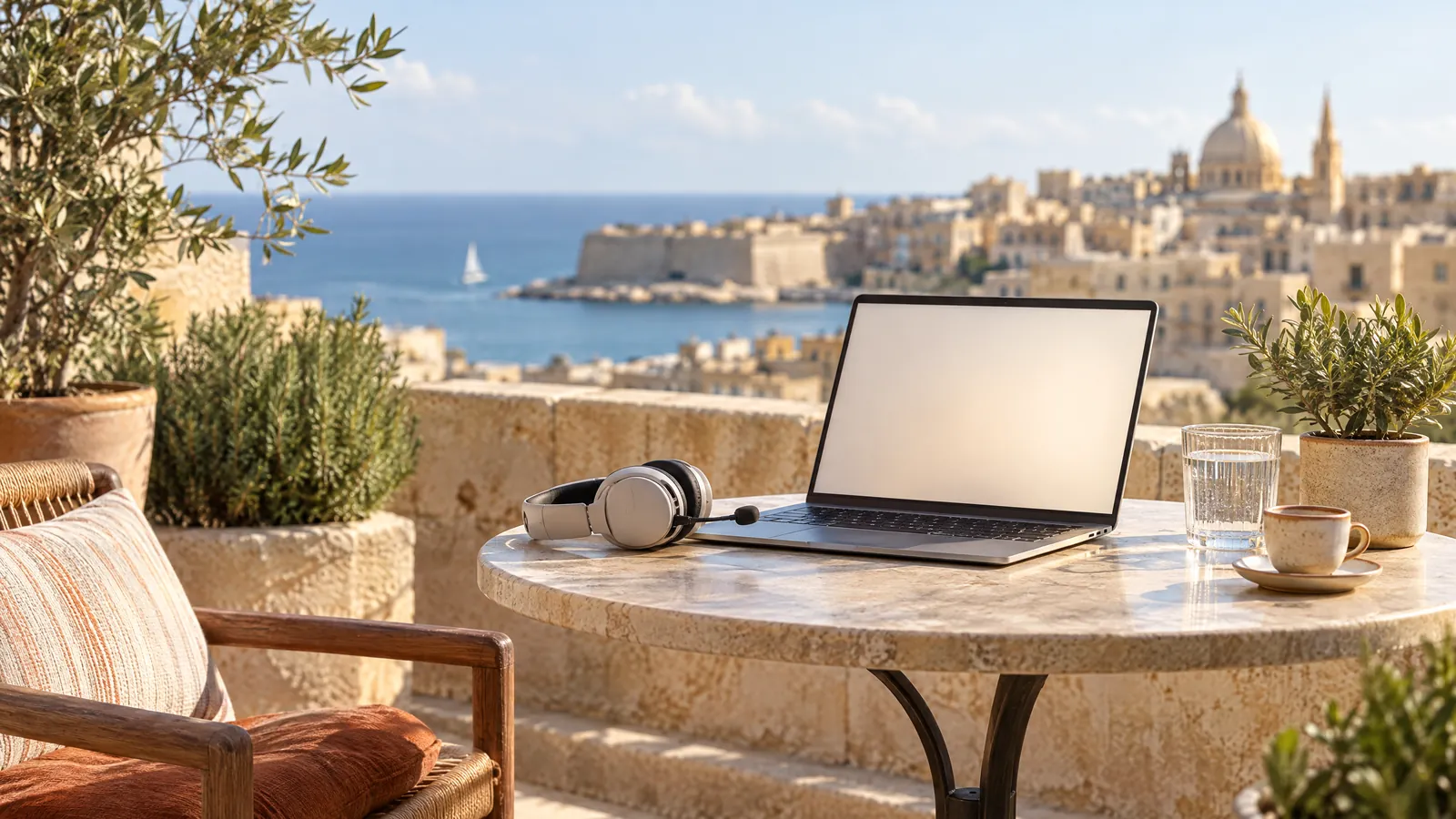
Once again, I've been reading about the problems people are dealing with. This time in r/malta, the island's Reddit forum. Anyone thinking about moving to Malta quickly has a picture in mind: plenty of sun, English as an official language, a small EU island in the middle of the Mediterranean, just a few hours' flight from Germany.
The questions people actually ask in r/malta, though, rarely revolve around beaches. They revolve around one single thing: how do I handle my job if my employer or my clients aren't based in Malta?
Malta and Cyprus are often mentioned in the same breath. I moved to Cyprus in 2021, and I can tell you: the hardest part wasn't the weather, the apartment or the authorities. It was the question of how to set up my income properly once I no longer lived in Germany.
Case 1: "Does My Employer Deduct the Tax, or Do I Have to Register as Self-Employed?"
In November 2025, someone wrote in r/malta that they were currently applying for remote positions (see the original post). The companies are all in the EU, but none of them in Malta. The question: do the employers deduct tax as usual, or do you have to register as self-employed and handle your taxes yourself? Followed by the honest admission that this is a little scary. A remote job was necessary because a move to another country was coming up in about a year anyway.
The answers are pretty much in agreement:
- As a rule, you pay tax where you live. If you live in Malta, you're liable for tax there.
- A foreign company without its own entity in Malta usually doesn't deduct Maltese tax or social security contributions. To do so, it would have to register as an employer in Malta, and many shy away from that effort.
- Three routes come up: employment through a Maltese entity of the employer, a so-called umbrella company that employs you locally and invoices your employer, or self-employment.
- Several people recommend self-employment: you send one invoice a month, which is practically your salary, and you pay tax and social security yourself. Someone adds that, depending on the service, VAT can come into play as well.
- And almost everyone says: get tax advice, at least in the first year.
What touched me about this thread: the fear isn't about emigrating. The fear is about getting something wrong with money.
Case 2: "Will My German Employer Accept That I Live in Malta?"
In March 2025, someone who felt that almost half of their gross salary in Germany goes to taxes and contributions asked whether people in r/malta work fully remotely for companies outside Malta (see the original post). The real question: do employers accept you having your tax residence in Malta? And explicitly not as a freelancer, but in regular employment.
One of the top-rated answers was matter-of-fact: you have to ask your employer. They then have four options. They handle the Maltese contributions from Germany (complicated), they set up a company in Malta (expensive), they use an umbrella company (simpler, but it costs money), or they end the employment and hire you as a self-employed contractor. The last option is less secure for you, because you lose the protection you have as an employee.
Another answer said none of this is technically difficult, since a local payroll service could handle it. Even so, many larger German companies don't want the hassle when they can just as well hire someone in Germany. And some employers might argue that they can pay you less because your cost of living is now lower.
Someone from Malta who works for a company abroad themselves added: finding remote jobs had never been a problem in their field. Their advice, however, was to work with B2B contracts rather than classic employment.
What Both Cases Have in Common
Both want the same thing: to live in Malta and keep earning. And both run into the same hurdle. The island isn't the problem. The problem is how the income is structured.
Employment with a German employer often doesn't fit with living in Malta, because the employer has to play along. Self-employment, on the other hand, often fits better, because you choose your clients yourself, send them invoices and don't have to ask anyone's permission about where you live. That's exactly why the answers in both threads keep coming back to the same point: B2B, invoice, self-employed.
Working Remotely from Malta: The Rules in Brief
- As an EU citizen, you don't need a visa or any special permit to live and work in Malta. If you stay longer than 90 days, you register with Identità and apply for a residence document (eResidence).
- As a non-EU citizen, there is the Nomad Residence Permit. According to the Residency Malta Agency, one of the requirements is a gross income of at least €42,000 a year, from an employer, your own company or clients abroad. Anyone who provides services to companies or people in Malta is excluded.
- On the tax side: if you move to Malta, clarify beforehand where you're liable for tax, and if you hold shares in a company, check the issue of exit taxation in Germany. Get advice from a tax advisor with international experience before you move. Austria and Switzerland have their own rules.
Visa and tax rules change. Always check the current conditions yourself.
The Underrated Advantage: The Same Time as in Germany
Malta is in the same time zone as Germany, Austria and Switzerland, daylight saving time included. That sounds unspectacular, but for working remotely abroad it's a real advantage.
If you live in Panama or Thailand, you have to build your day around Europe. Not in Malta. Your client in Munich calls at 10:00, and it's 10:00 for you too. You can offer completely normal business hours, return calls on the spot and hold video calls in the afternoon, without anyone noticing that you're sitting on an island.
Moving to Malta: A Realistic Look at the Costs
Malta isn't cheap. As a rough guide, a comfortable budget for a single person is around €1,800 to €2,200 a month, and for a couple around €2,500 to €3,500. The biggest item is rent. These are ranges, not a guarantee.
Then there are things that come up again and again in personal accounts: the island is small and densely populated, traffic can get on your nerves, and many apartments are damp in winter and hot in summer. The neighboring island of Gozo is quieter and usually cheaper, but there's less on offer. Ideally, go there for a few weeks first and work from there before you commit.
Two Routes That Suit Malta
Route 1: You work self-employed in remote sales. You hold video calls with prospects in the German-speaking region (Germany, Austria and Switzerland); your client is based outside Malta, and you send invoices. That's exactly the model the answers in r/malta recommend. And thanks to the same time zone, you make your calls at completely normal times.
Route 2: You take your own business with you. You're a coach, consultant, agency, tradesperson with an online offer, or you run a shop, and your customers are in Germany, Austria or Switzerland. Then the question isn't whether you're allowed to work from Malta, but how new customers will find you once you're no longer around. Referrals from your old circle dwindle over time, because you're no longer visible. A channel you can manage from anywhere makes up for that. Being self-employed in Malta then means: you live on the island and win your customers online in the German-speaking region.
Before You Move: Five Questions to Ask Yourself
- Will I be employed or self-employed when I live in Malta? If employed: will my employer play along, and how exactly?
- Who are my clients? For the Nomad Residence Permit, they have to be based abroad. For EU citizens there's more freedom, but you still have to sort out your tax situation.
- Where will my customers come from in the first year? If the answer is "from my old network", plan for a second channel.
- Who will advise me on taxes? In Malta and in Germany, in writing, before you hand in your notice or deregister.
- Where exactly do I want to live? Test the area, the apartment and the internet connection before you sign a long lease.
What's in It for You
You want to go to Malta. Maybe you've already looked at apartments in Sliema or on Gozo. And then comes that uneasy feeling the first thread described so honestly: am I getting something wrong with money?
Life in Malta is relaxed when your income is self-employed and properly set up, and your customers are in your own time zone.
Here's what you gain:
- Clarity instead of fear. You now know which three models exist and why most people end up with self-employment. That way you go into the conversation with your employer or your tax advisor well prepared.
- Independence from an employer. If your income comes from several clients or customers of your own, you don't have to ask anyone's permission to live in Malta.
- A normal working day. Same time zone means: no calls at 22:00, no alarm at 5:00 a.m. You work just like in Germany, only with the sea on your doorstep.
How much you earn depends on you and your path. Nobody here promises you fixed figures.
What This Looks Like at Plaith
Plaith is based in Cyprus, so on a Mediterranean island too. We help self-employed people and small businesses win customers predictably through Meta Ads. At Plaith, 6 specialists, combining people and AI, take care of videos, ad messaging and campaign management, from €26 a day plus a one-time setup, cancel monthly. It works just the same if you live in Malta and your customers are in the German-speaking region.
We're also looking for sales partners who work self-employed and remotely. If that's your path, find out how to become a partner.
If you want to know whether Plaith is a fit for your business, book a short call with René. Fifteen minutes, no sales pressure, and we'll tell you honestly if it's not a fit.
Frequently Asked Questions
Do I Need a Visa for Malta as a German or Other EU Citizen?
No. As an EU citizen, you're allowed to live and work in Malta. If you stay longer than 90 days, you register with Identità.
Can I Work for My German Employer from Malta?
It's possible if your employer plays along. According to the answers in r/malta, they then have to handle the Maltese contributions, use a local entity or go through an umbrella company. Many choose self-employment instead.
What Does Living in Malta Cost?
As a rough guide, around €1,800 to €2,200 a month for a single person, depending on the area. It's usually cheaper on Gozo.
Is Malta a Good Fit for Working with Clients in Germany?
Yes. Malta has the same time as Germany, Austria and Switzerland. You work during completely normal business hours.
Read next

How to Find Sales Reps: Remote and on Commission
7 min read
Meta Ads Agency Costs 2026: Prices, Videos, Red Flags
A Meta ads agency (Facebook and Instagram advertising) costs more than the monthly fee on its price list. Add up management, new videos, setup and any percentage surcharges. Based …11 min read